
Fuerstenhof Leipzig
A Grand Hotel with a Princely Past
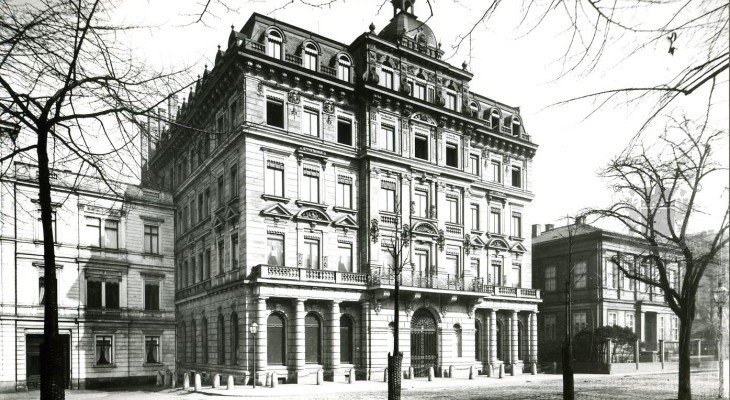
Built as a private palace for the wealthy Leipzig banker Eberhard Heinrich Löhr in the 1770s, the Fürstenhof has witnessed more than two centuries of German history.
Its transformation into a hotel in 1889–1890 marked the beginning of a new chapter. Princes, industrialists, artists and actors followed one another through its doors. Among its distinguished guests were Marlene Dietrich and German household names such as Hans Albers, Lil Dagover and Johannes Heesters.
The hotel's architectural treasure is its remarkable Serpentine Hall, created in 1865 and decorated with rare Saxon stone. A major reconstruction in 1913 gave the Fürstenhof much of its present character.
Through two world wars, the division of Germany and reunification, the hotel remained part of Leipzig's social history. Known as the Hotel International during the communist era, it regained its historic name after reunification.
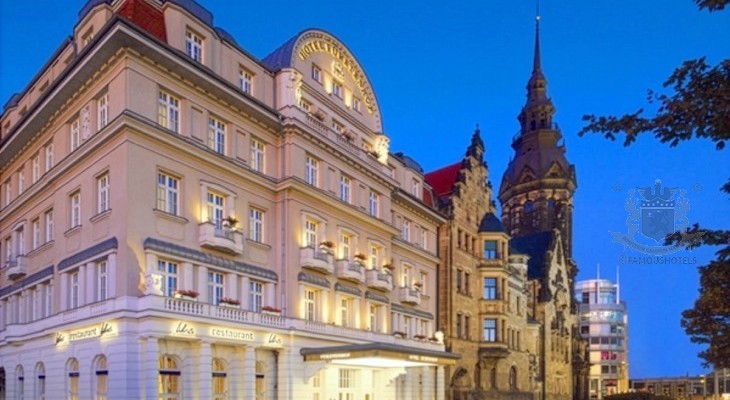
Following another extensive renovation, the building reopened first again in 1996, and in 2025 as the Lumière Boutiquehotel im Fürstenhof. The historic Fürstenhof lives on, although its original name now shares the stage with a modern hotel brand.
Deatails about its architectural history under Legendary Stories.
1770–1778 — The Merchant's Palace
Leipzig banker and councillor Eberhard Heinrich Löhr commissions architect Johann Carl Friedrich Dauthe to build an elegant classical residence. Behind the palace lies Löhr's Garden, one of the city's celebrated private gardens, open to the public.
1813 — The Battle of Leipzig
The Battle of Nations devastates much of the surrounding garden. The property subsequently passes through the Löhr and Keil families.
1865 — The Serpentine Hall
Architect Moritz Münch creates a magnificent dining room lined with Zöblitz serpentine, a decorative Saxon stone. The hall becomes one of the building's most remarkable surviving interiors.
1886 — A Change of Ownership
The Leipzig Real Estate Company acquires the property. Parts of the former garden are divided into building plots.
1889–1890 — The Birth of the Fürstenhof
Architect Franz Hannemann converts the former private palace into a hotel. The building receives a new Renaissance-style façade. Leipzig gains a prestigious address for visitors to its thriving trade fairs.
1911–1913 — A Grand Hotel Emerges
A major reconstruction by architect Hermann Günther transforms and enlarges the property. The hotel reopens on 18 October 1913, the centenary of the Battle of Leipzig, under owner Mathias Erwig.
1920s–1930s — The Famous Guests
The Fürstenhof becomes a favourite address for prominent visitors to Leipzig. Its guests include German film stars Marlene Dietrich, Hans Albers, Lil Dagover, Henny Porten and Emil Jannings.
1945 — American Headquarters
Following the American occupation of Leipzig in April, the hotel temporarily serves as a military headquarters. Hotel operations subsequently resume.
1949 — Hotel International
Following expropriation, the Fürstenhof is renamed Hotel International. It becomes one of Leipzig's leading hotels under the East German state.
1965 — The Interhotel Era
The property joins the GDR's Interhotel organisation, accommodating international visitors, trade-fair delegates and official guests.
1990 — German Reunification
The hotel closes temporarily in December as Leipzig enters a period of political and economic transformation.
1991–1996 — Restoration and Revival
After changes of ownership, the building undergoes extensive restoration and modernisation. It reopens in 1996 as the Hotel Fürstenhof Kempinski.
2000 — The Luxury Collection
The hotel becomes part of Starwood's Luxury Collection, later incorporated into Marriott International.
2018 — New Ownership
Leipzig-based Vicus Group AG acquires the historic property.
2021 — Closure and Renovation
The hotel closes in March. A comprehensive programme of restoration and redevelopment follows.
2025 — A New Chapter
The building reopens as the Lumière Boutiquehotel im Fürstenhof, preserving the historic Fürstenhof name within a new hotel identity.
Architectural significance
The protected building is described in the published monument inventory as an early 20th-century hotel with a substantially older core.
The Serpentine Hall is explicitly recognised for its rarity. The building has architectural, historical, documentary and urban significance.
Period
Architect
Contribution
1770s
Johann Carl Friedrich Dauthe
Löhr residence and garden
1865
Moritz Münch
Serpentine Hall
1889–1890
Franz Hannemann
Conversion into hotel
1912–1913
Hermann Günther
Reconstruction and enlargement
Assessment: The Fürstenhof is a historically layered building, not an intact 18th-century palace. Its most compelling architectural narrative is the survival of the 1865 hall within a hotel shaped substantially in 1913.
Mathias Erwig (ca. 1920s)
Restaurant Fürstenhof Bar
Fitnessraum, Erlebnisbad auf einer Fläche von 650qm in exotischer Felslandschaft, indoor pool, Finnische Sauna, Römisches Dampfbad, sauna,