
The Oriental – Bangkok, Thailand (English)
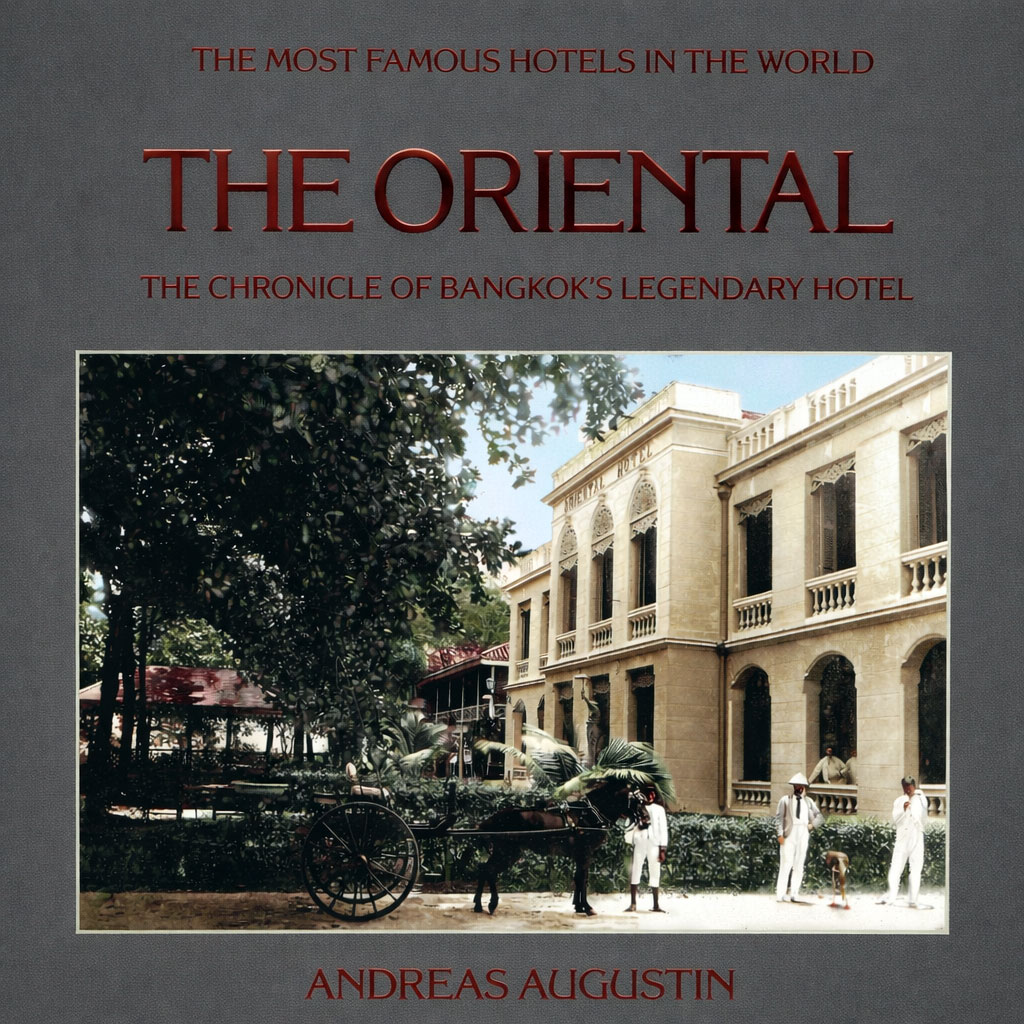
Author
Andreas Augustin
Pages
192
Photographs
Illustrations
Over 480 (many never before published) photographs and illustrations
Leather-bound edition
Yes
Binding
Hardcover with dust jacket
ISBN
978-3-900692-52-0, 978-3-900692-5
Size/Weight
245 x 225 mm, 1100 g
Price: € 58.00
Add to cart2026: Rarely has a hotel story been researched with greater rigour—or over a longer span—than that of Mandarin Oriental, Bangkok. Long before it carried today’s name, it took root as a simple Oriental Hotel in the mid-nineteenth century, on the banks of Bangkok’s Chao Phraya River, the “Mother of Waters”.
This new edition presents the most extensive chronology ever published on the hotel. Across 192 pages, with more than 480 illustrations, the author recounts the house’s rise to global renown in brisk, readable passages. He weaves in political shifts and world events, and builds a vivid portrait of a grand hotel that becomes part of history itself.
About "The Oriental"
When Thailand was still Siam – in the mid of the 19th century – a rest house for foreign seafarers was established on the banks of the Menam river. It was to become one of the greatest hotels in the world: The Oriental
The Oriental — so many stories, so many tales. What’s the secret behind this composition? This book tells it all. From famous guests to PR strategies and management tactics. There is no other book in the world of hospitality like this one. Packed with over 480 photographs it introduces the most legendary names in the world of politics, arts and sports. Dating back to the mid of the 19th century you find the stories of Jim Thompson, the silk king, who jointly owned it with French photographer Germaine Krull and a Thai . We trace the list of owners back to the year 1863.
The late Peter Ustinov loved it, Graham Greene has a suite named in his honour and Michael Jackson hid from the press there. Ever since, Hollywood royalty graces the hotel, the Queen of England enjoyed it and her Majesty, the Queen of Thailand, is a beloved faithful regular visitor.
From Joseph Conrad, the sea captain and writer, who drank in the bar, to Nijinsky, who danced in the ballroom. Somerset Maugham suffered from malaria in his suite, playwright and actor Noël Coward treasured the memories of his favourite cocktail venue. Meet over 150 of the most important international authors in their lounge and enjoy a glimpse of the fascinating Oriental Royal Collection. Over 500 legendary guests are listed in this book.
Gavin Young
Harold Stephens
EDITION RACONTEUR — Strictly limited edition — NEW — leather bound edition available
THE TABLE OF CONTENTS:
1850s—In which Siam opens its gates to the world > 27
King Mongkut (Rama IV) welcomes international trade, setting the stage for modern Bangkok. French, British, American, Danish, Swedish, Norwegian and Hanseatic consuls establish missions along the Chao Phraya, creating a distinct diplomatic quarter by the river, forming a lively society that foreshadows the cosmopolitan spirit of the Oriental Hotel to come.
1860s—In which the first Oriental emerges and is lost > 35
New Road (Charoen Krung Road) is completed. Beside it, Captain James White runs a riverside residence for foreigners which Atkins Dyer and William West transform into the Oriental Hotel, first noted in the 1863 calendar. In 1865, a fire destroys sixty-nine buildings, including the fledgling hotel. For several years, its history falls into obscurity.
1870s—In which the Oriental is officially born > 37
Danish captains Henning Harms Jarck and C. Salje re-establish the Oriental on its present site. From 1876, officially recognised as its founding year, the hotel begins its rise as a pioneer for travellers venturing inland from the main shipping lanes. A Chinese baker within its walls gains fame.
1880s—In which telegraphs and travellers arrive > 40
The first telegraph office, designed by Stefano Cardu, connects Bangkok to the world. Under Captain Hans Niels Andersen, later founder of the East Asiatic Company, the Oriental enters a golden age of hospitality. Among its visitors is a young seaman, Józef Teodor Konrad Korzeniowski—later Joseph Conrad.
The manager’s wife presents departing ladies with fans, a charming ritual that foreshadows Mandarin Oriental’s “I’m a Fan” tradition. Horse trams rattle along New Road.
1890s—In which the glow of electricity attracts royalty > 45
The Royal Palace and the Oriental are among the first in Siam to shine with electric light. Anticipating Crown Prince Nicholas of Russia (later Tsar Nicholas II), King Chulalongkorn (Rama V) makes the Oriental his residence. French architect Lucien Fournereau sketches the cosmopolitan air of its salons. Guests devour weeks-old editions of Le Figaro and The Times as if fresh. Trams are electrified, and Rama V inaugurates Siam’s first railway, from Bangkok to Paknam.
1900s—In which the Oriental proclaims its greatness > 71
Advertisements declare it “the largest and best hotel in Siam,” boasting forty bedrooms, private suites, a dining room, concert hall for 400, and a verandah overlooking the river. The lounge stocks European papers and journals; society converges at its doors.
1910s—In which ladies take charge > 74
Madame Maria Maire becomes proprietress, presiding over expansion. A plaque in today’s Authors’ Lounge recalls that the Austro-Hungarian Legation was first housed here in 1913. The legendary dancer Vaslav Nijinsky performs the first Western ballet in Thailand. King Vajiravudh (Rama VI) unifies the railways under the Royal State Railways. Motorcars now jostle for space along New Road.
1920s—In which weary authors find refuge > 78
Writers like W. Somerset Maugham and Noël Coward arrive, starting the hotel’s enduring legacy as an authors’ hotel. The Oriental Hotel Co. Ltd. is founded with capital of Tcs. 130,000. In 1927, Bhumibol Adulyadej—the future Rama IX—is born.
1930s—In which travellers arrive by propeller and flying boat > 86
The new “jet-setters” are propeller-hoppers, pausing at a dozen waypoints between Europe and Asia. Flying boats glide into Bangkok from both East and West, bringing a new stream of international guests to the Oriental’s verandahs.
1940s—In which war consumes, and rebirth begins > 103
Japanese forces occupy the hotel during World War II, housing prisoners of war and stripping its interiors. After 1945, revival comes under Thai silk magnate Jim Thompson and Germaine Krull, Franco-German photographer and war correspondent. At the Bamboo Bar—Bangkok’s first jazz bar, ties are handed out at the door, refinement returns.
1950s—In which the Garden Wing rises and Le Normandie shines > 111
The 10-storey Garden Wing alters Bangkok’s skyline. So does Bangkok’s first French restaurant, Le Normandie, setting new culinary standards. Mrs Eleanor Roosevelt addresses more than 1,000 guests at the Oriental.
1960s—In which new hands guide the helm > 114
In 1967, Italthai Group acquires the hotel under Chaijudh Karnasuta and Giorgio Berlingieri. With 133 rooms, it begins its transformation under general manager Kurt Wachtveitl, who will preside for four decades.
A Building Chronology > 118
1970s—In which the River Wing rises and tea becomes tradition > 125
The Oriental partners with Mandarin to form Mandarin Oriental Hotel Group. The 22-storey River Wing opens. The former lobby becomes the Authors’ Lounge, now home to the afternoon tea ritual. Hollywood knocks at the door.
1980s—In which the Oriental is crowned the world’s best > 130
The S.E.A. Write Award is inaugurated, with Queen Sirikit presiding over its first ceremony. For ten consecutive years, Global press acclaims the Oriental as the “World’s Best Hotel” securing the Oriental’s reputation as a global icon—celebrated for flawless service, meticulous detail, and a style all its own. Thailand’s first Thai cooking school is established and the Oriental Queen begins offering luxury river cruises to Ayutthaya and Bang-Pa-In.
1990s—In which the Oriental goes public > 151
Listed on the Stock Exchange of Thailand as The Oriental Hotel (Thailand) PCL, later OHTL, the hotel launches its first Oriental Shop. The Oriental Spa opens, pioneering Thai wellness. Hollywood and Asia alike discover their stars upon the terrace overlooking the Chao Phraya—from Elizabeth Taylor, Michael Jackson and Roger Moore to Chow Yun-fat, Jackie Chan and Gong Li. Statesmen and royals are frequent guests, including Queen Sirikit, Princess Diana and Queen Elizabeth. At the same time, the “Three Pageboys” advertising campaign captures hearts worldwide. In this decade, the first edition of The Oriental appears in the library of The Most Famous Hotels in the World, enshrining the hotel’s story in print.
2000s—In which fans and resilience define a new era > 153
Mandarin Oriental launches the celebrated “I’m a Fan” campaign, and the hotel embraces its new name: Mandarin Oriental, Bangkok. The Sunday Times acclaims it “The Best Hotel in the World,” while Condé Nast Traveller ranks it No. 1. Fine dining, long a hallmark of the Oriental, enters a new golden age under some of the world’s most distinguished chefs, who bring fresh brilliance to its restaurants. Le Normandie crowns this decade by becoming Thailand’s first Michelin-starred French restaurant.
2010s—In which Mandarin Oriental, Bangkok becomes the haunt of gourmets > 158
A sensational gathering of Michelin-starred chefs brings new brilliance to the hotel’s restaurants, carrying forward its long tradition of culinary excellence with innovation and flair. Le Normandie continues to set the benchmark for French fine dining, while Thai and international kitchens alike reach new heights. The exhibition An Oriental Journey opens, celebrating the hotel’s rich heritage, even as renovations and enhancements discreetly modernise its facilities. This decade is also marked by deep national sorrow: in 2016 His Majesty King Bhumibol Adulyadej passes away, ending a reign of seventy years. The Oriental, always favoured by the royal family, stands in mourning with the nation.
2020s—In which resilience becomes renewal > 160
Even in the shadow of the pandemic, when closures seemed inevitable, the hotel found creative ways to endure—from fine Thai dining at Baan Phraya to thoughtful alternatives that kept the spirit of hospitality alive. Every crisis carries opportunity, and the Oriental emerges stronger from these trials. Behind its timeless décor, state-of-the-art renovations prepare it for the future; in its kitchens, some of the world’s finest chefs continue to raise the culinary bar. In the 2020s, Mandarin Oriental, Bangkok shines more than ever as a complete experience—fortified, renewed, and ready for decades to come.
Epilogue > 169
Guests > 170
Famous Authors > 172
S.E.A. Write Award > 175
Who’s Who > 177
Did You Know > 189
Managers & About this book > 190
Bibliography > 191
The Making of ...
In the early 1860s, a seafarers' home at the river Meinam in Siam, the 'Kingdom of the White Elephant', opened its doors. Over 150 years later it has become the most famous hotel of modern Thailand and one of The Most Famous Hotels in the World®.
With over 460 (some never before published) photographs and illustrations, this new book by Andreas Augustin is the new 'Grande Dame' of the Edition Raconteur, the grand format in the library of hospitality.
'The Oriental' — a book full of exciting tales and entertaining stories, is available now!
Andreas Augustin presents
The Oriental, Bangkok
in the library
the Most Famous Hotels in the World — Edition Raconteur
Thanks to Amanda Hyndman, who encouraged this new edition.
Among all the people who were involved in this and the original editions of this book were: Kurt Wachtveitl, Mark S Bradford, Melvin J J Robson, Norbert A Kostner, Dr Parichart J Suksongkroh, Jonas A Schuermann, Noppawan Phahulrat, Rabieb Boonkunch, Virochana Mochachandra, Supatana Atorn-Phtai, Jørgen Kamstrup, Susanne Worsfold, Phenkhae Chattanont, Anne Arunie, Yasmin Nissen, Herta Tschurlovits, Julie Zhou, Chaturong Siewsutha and Mimi Berlingieri who shared her favourite anecdotes with us.
We thank the late Chancham Bunnag for her valuable research and information. We are also especially grateful to Pornsri Luphaiboon, to hotel manager Marcus Bauder and to Ankana Kalantananda who helped so much with all her golden memories.
We are very grateful to the late HSH Professor Prince Subhadradis Diskul for his kind advice concerning the history of the Kingdom, we keep fond memories of the late Gavin Young, who told us his Oriental stories. So did the author Harold Stephens.
Last but not least many thanks to the public relations department and to Mayuree Laolugsanalerd, guest relations director, and all the others who have contributed so generously to this book and who are not mentioned by name.
Photographs and copyright for all pictures not specially marked: By Michelle Chaplow, Aniwat Aeulek and the hotel’s archives;
20th Century Fox, Fotografische Sammlung Museum Folkwang, Andreas Augustin Collection, famoushotels archives, Collection Melinda Maire Sandberg, The Malcolm McDonald Collection, Tate Collection, The New York Times, Library of Congress Washington, Nationalbibliothek Wien.
Researching editors: Andrew Williamson, Carola Augustin
All rights in this publication are reserved. This book and no part of it may be reproduced, stored in a retrieval system or transmitted in any form or by any means, electronically, mechanical, photocopying, recording, or otherwise without the prior permission in writing of the copyright owner.
© 2016, Andreas Augustin (aa@famoushotels.org)
The Most Famous Hotels in the World® www.famoushotels.org
Library title: Augustin, Andreas. The Oriental Bangkok, The Amazing Tale of Bangkok’s Legendary Hotel. A Chronology. Vienna. 2016. Edition Raconteur. The Most Famous Hotels in the World®.
ISBN: 978-3-900692-52-0
The Oriental – Bangkok, Thailand (English Leather Edition)
Relevance: 103 matches (94%)
The leather bound books form a limited edition of famoushotels books. They are hand bound and – upon request – autographed ...
Metropole – Hanoi, Vietnam (English Leather Edition)
Relevance: 7 matches (6%)
The hand bound leather cover makes this a very special vintage collectors edition. Only 20 pieces of the 2007 edition were produced. Th...
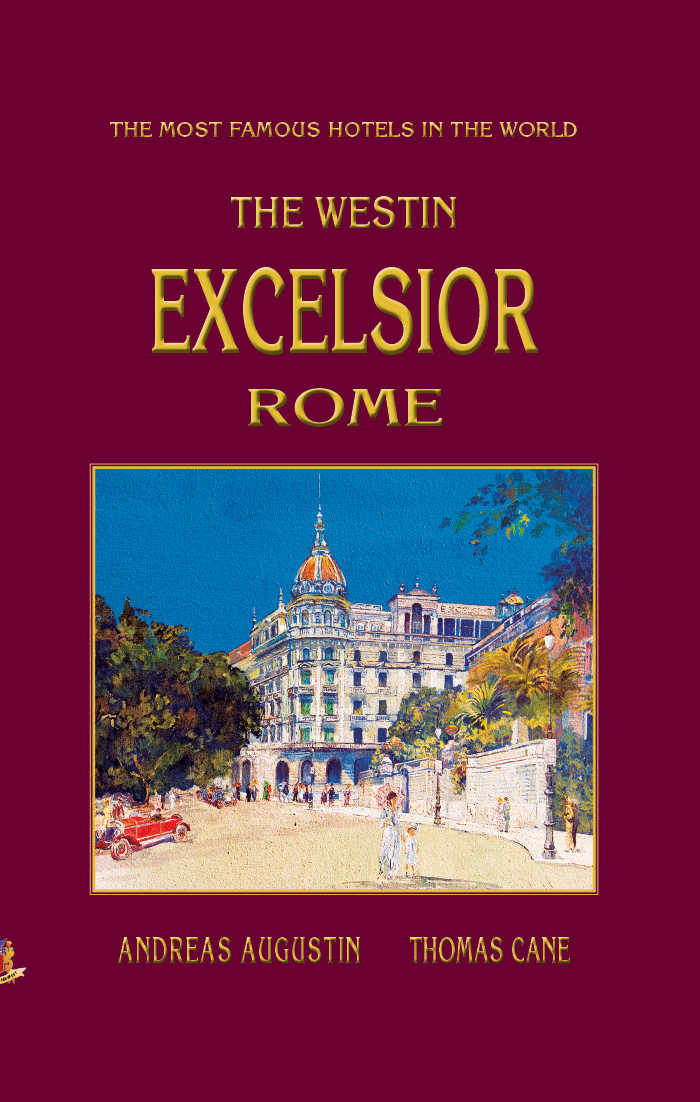
Excelsior – Rome, Italy (English)
Relevance: 7 matches (6%)
ROME’S GRAND HOTEL Excelsior – A Century of Fame and Splendor On 17 January 1906, Rome set the stage for grande...
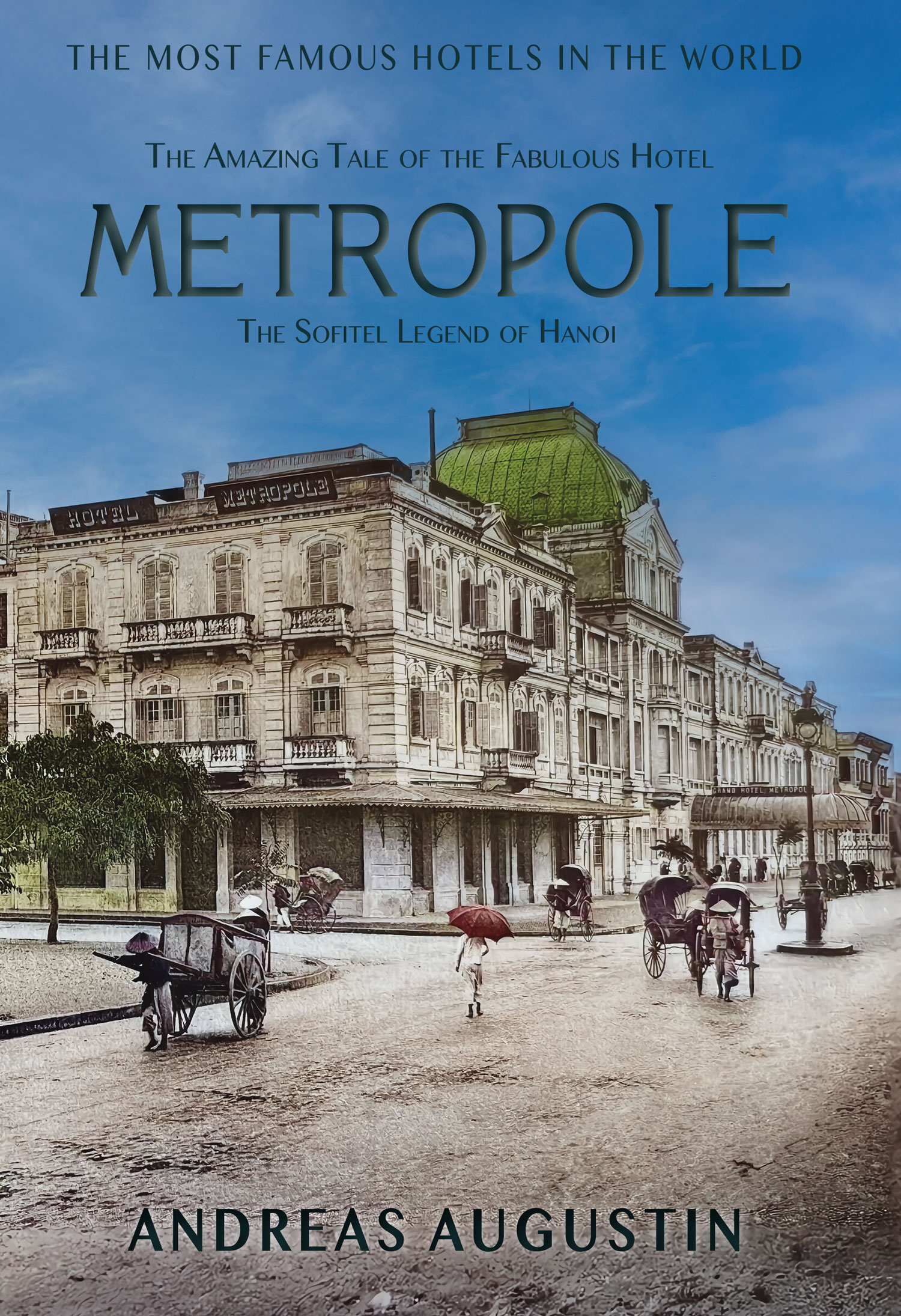
Metropole – Hanoi, Vietnam (English)
Relevance: 6 matches (5%)
5.0 out of 5 stars "A great book about a great hotel" -- Reviewed in the United Kingdom: Andreas Augustin manages to navigat...
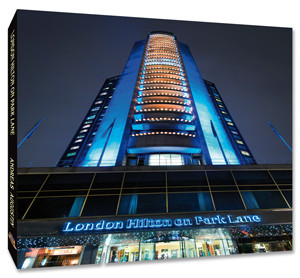
London Hilton on Park Lane – England (English)
Relevance: 5 matches (5%)
Overlooking Hyde Park, London Hilton on Park Lane stands tall but never still. In 1963, when it opened its doors, the London Hilton w...
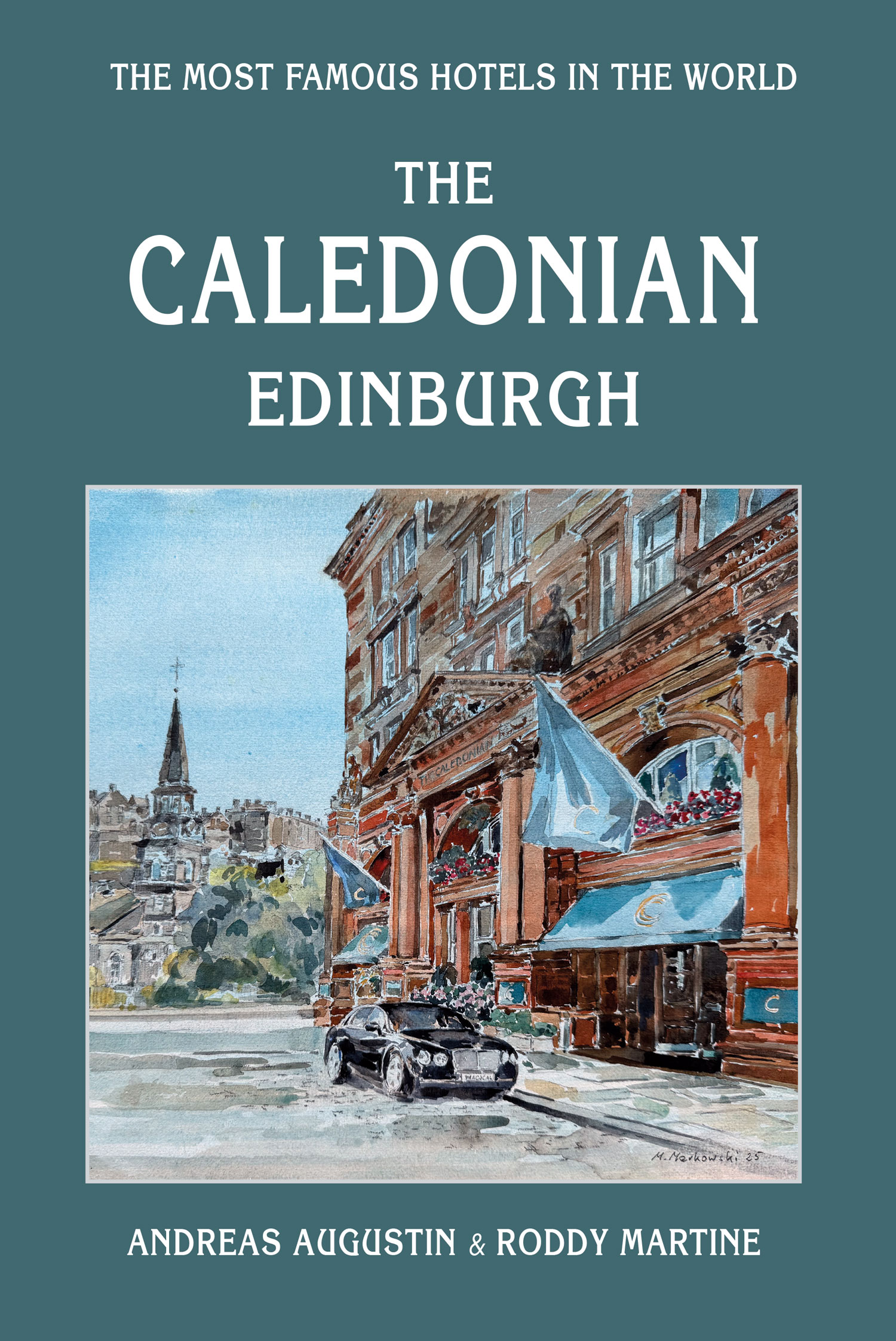
The Caledonian – Edinburgh, Scotland (English)
Relevance: 5 matches (5%)
Leather or cloth bound — the choice is yours! By the end of the 19th century, Scotland had become the land of artists and poe...
Dear wonderful Readers;
Do you reserve time to read and to prepare your next journeys? This year look out for our new book GRAND HOTEL LVIV (Ukraine) — a bold statement of civil resistance in a war-torn country.
THE GALLE FACE TREASURY takes you to the exotic island of Sri Lanka. It's one of my heartfelt memories of a wonderful hotel, its owning family and staff. But also it's fantastic history — being the mousetrap for every traveller of note who travelled from West to the South Eastern regions of Asia.
I recommend the new edition of HOTEL METROPOLE HANOI.
The first copies of THE HALF MOON TREASURY are being released – exclusively to our readers (and before its official launching date).
We have released a reprint of our successful book THE WESTIN EXCLESIOR ROME, the most famous hotel on Via Veneto.
Upon request, we dispatch all our books personally autographed (as you know).
Have a save journey!
Andreas Augustin
aa at famoushotels dot org
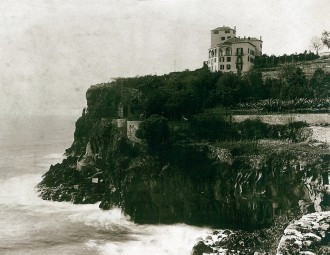
Reid’s Palace
There are hotels that follow fashion. And there are hotels that outlive it. Reid’s Palace belongs to the latter. Opened in 1891,...Read More
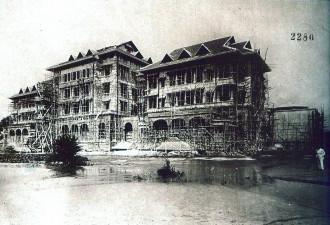
Le Royal
In 1923/24, the construction of a 55-room hotel in Phnom Penh was proposed. Architect Ernest Hébrard, who was largely responsible for...Read More
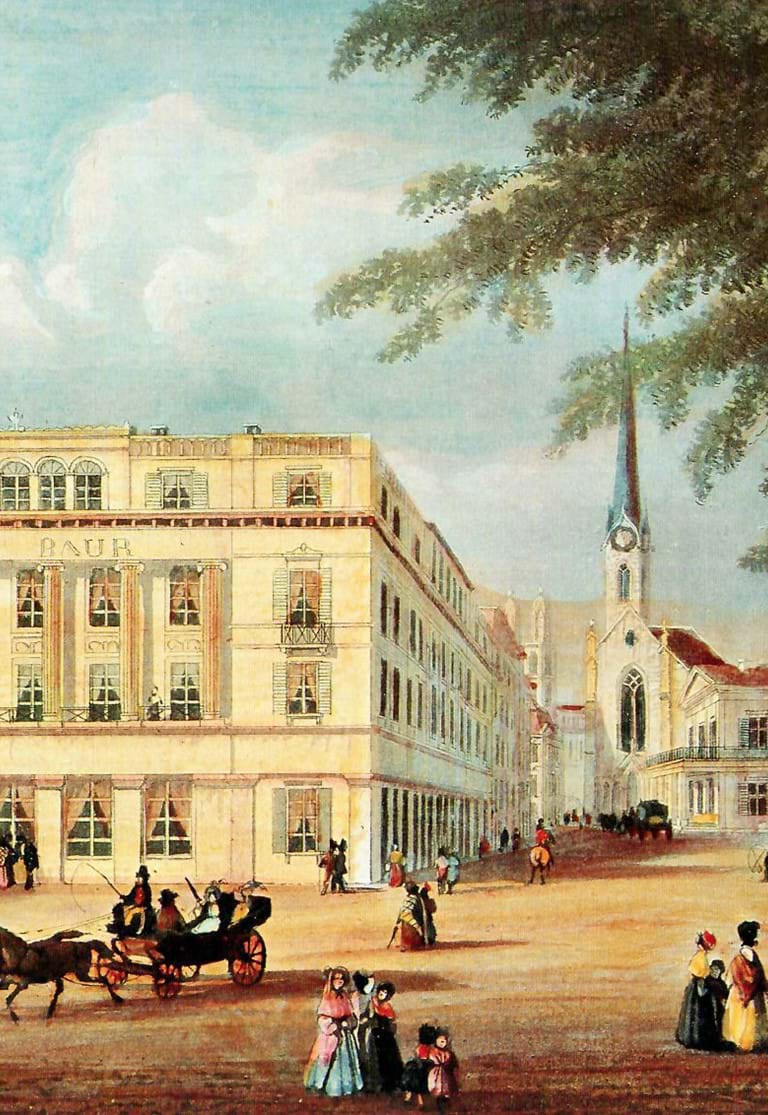
Baur, former Savoy Baur en Ville, today Mandarin Oriental Savoy Zurich
Johannes Baur, born in Austria in 1795, was a visionary entrepreneur who profoundly shaped Zurich’s hospitality industry. In 1837, at the age...Read More
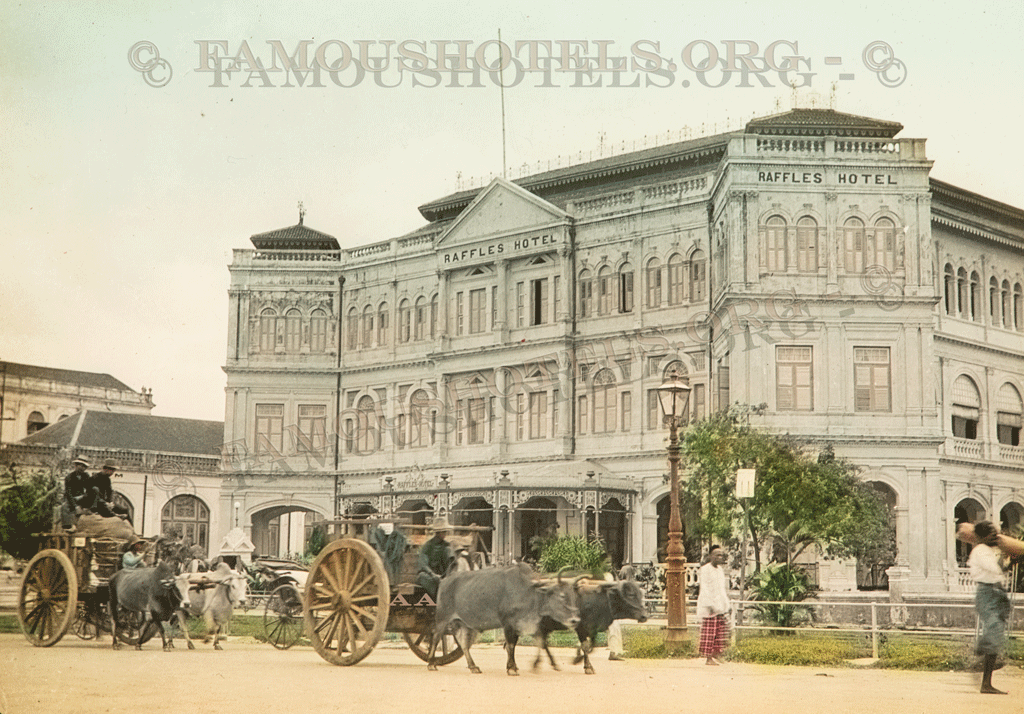
Raffles Hotel
The historic building (top, slide to the right): The "new" Raffles main building in 1899. It opened on 18 November 1899, featuring the all new...Read More